Subtract to Multiply: The Hidden Power of Removing What Holds You Back
Most people try to become better by adding more to their lives. New habits. New routines. New commitments. I've done it too—for years. But here's what I've learned: they're doing it backwards.
The path to becoming the person you want to be isn't paved with additions. It's cleared by removing the stuff that's in the way.
Why We Keep Piling On
We live in a world obsessed with more. More productivity hacks. More morning routines. More side projects. More networking. More everything.
When we want to improve, our first instinct is to add something. A new habit tracker. A gym membership. Another online course.
But this approach has a fatal flaw—it ignores the clutter already weighing us down. You can't pour fresh water into a cup that's already full. I tried. Doesn't work. You just make a mess.
The Weight You're Carrying
Here's the thing I wish someone had told me earlier: the stuff holding you back isn't what you're missing. It's what you already have.
Multiple ventures splitting your focus. Relationships that drain your energy instead of filling it. Habits that steal your time and chip away at your health. Commitments you made years ago that no longer serve who you're becoming.
Each one creates friction. Each one demands attention. And attention? That's the most finite resource you have. I learned this the hard way—juggling five projects at once, wondering why I felt exhausted but wasn't actually moving forward on any of them.
Fewer Bad Habits Beat More Good Ones
Here's the counterintuitive truth I keep coming back to: you don't need more good habits. You need fewer bad ones.
Most people already know what to do. They know they should exercise, eat well, focus on meaningful work, nurture important relationships. I know all this stuff. You probably do too.
The problem isn't knowledge. The problem is the bad habits eating up all the time and energy you'd need to actually do what you already know. That's the leak in the bucket. Plug it first.
The Deletion Playbook
Radical deletion requires a system. Without one, you'll default back to adding instead of subtracting. Trust me—the "more" instinct is strong.
Here's the three-step process I use:
Step 1: Run a Deletion Audit. Sit down and list everything consuming your time, energy, and attention. Be ruthless. Be honest. Include the ventures, relationships, habits, subscriptions, commitments, obligations—all of it. Then rate each one: Is this contributing to who I want to become? Or is it just... there?
Step 2: Automate What Remains. After you've deleted, look at what's left. Identify tasks that need to happen but don't require you specifically. Set up systems. Create templates. Build automations. Reclaim hours each week without sacrificing outcomes. This part feels like magic when it clicks.
Step 3: Delegate the Rest. For things that need human judgment but not your unique expertise—find someone else. Hire help. Ask for support. Trade responsibilities with someone whose strengths complement your weaknesses. I resisted this one for years. Solo felt cleaner. But sometimes solo just means slower.
The Hell Yes Test
The key to making all of this work? Being radical. Half-measures produce half-results. I've tried the cautious approach. It doesn't stick.
Every item that survives your audit should make you say hell yes, this matters. If you feel lukewarm about something? If it's just "fine" or "okay"? It doesn't deserve a place in your life.
This applies to business ventures. Social commitments. Daily habits. Physical possessions. Lukewarm things consume the same resources as meaningful ones—but deliver a fraction of the value. That math doesn't work.
What Remains When the Noise Is Gone
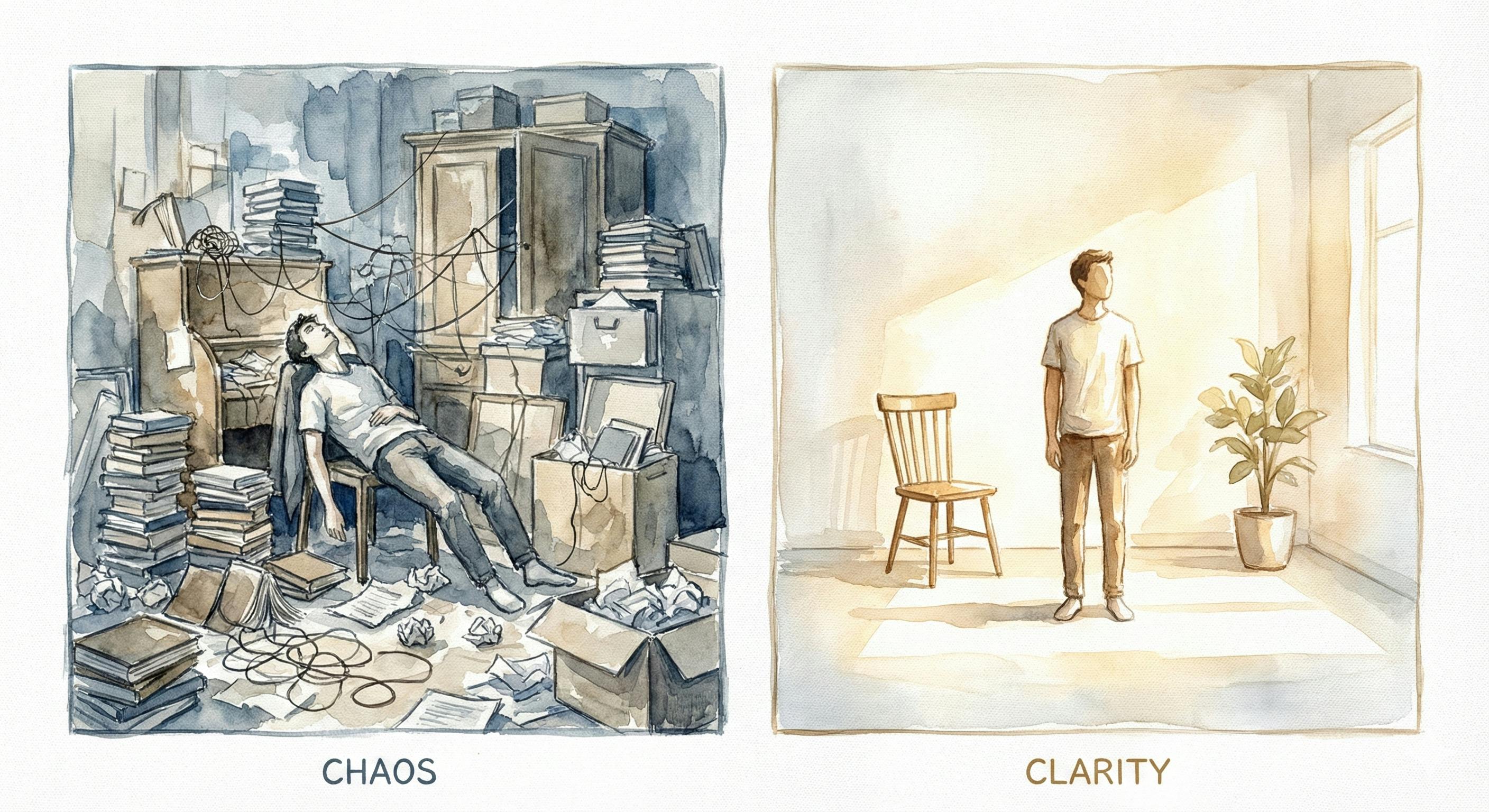
So what happens when you actually remove the noise? You can finally hear the signal.
The ideas that matter become obvious. The work that moves you forward actually gets done. The relationships that nourish you receive the attention they deserve.
Simplification isn't about having less for the sake of it. It's about making room for what truly matters. And once you taste that clarity? You won't want to go back to the clutter.
Start with one deletion today. Just one. See how it feels. Then do another tomorrow.